
COMPETITIVE PROJECT 2021-2025 PID2020-116036RB-I100 This project focuses on defining environmental comfort parameters that can encourage the presence of urban refuges where populations in vulnerable neighborhoods can find a space to satisfy their need for contact with nature, while contributing to reducing the impact of the heat island effect in the city. The project aims to characterize these potential urban refuges and, based on existing vulnerability indicators with some additions such as energy-related ones, identify urban areas lacking comfortable spaces. Thanks to this, guidelines can be provided to help make decisions that increase the city’s resilience. Urban refuges in vulnerable neighborhoods: environmental behavior of public space for the resilient city.
Coch, H., Lopez-*Besora, J., Isalgue, A., Pages, A., Crespo, I., Garcia-Nevado, E.
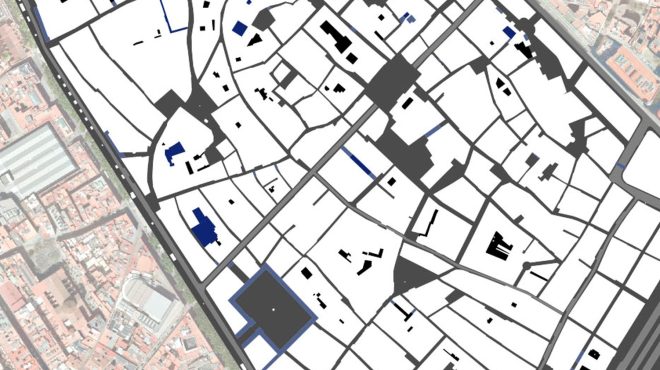
Over the last 60 years, urban population growth has risen from 33% to 55% and is projected to reach up to 70% by 2050. Mediterranean compact cities have proven to be efficient models in terms of energy use in buildings and transport. However, from an energy perspective, this high efficiency of compactness can result in low resilience of the urban environment. In extreme situations, such as those related to climate change or currently the COVID-19 pandemic, the weak points of any system, including the urban system, become apparent. Requirements related to health and indoor comfort have been extensively studied, but the current situation has highlighted citizens’ need to connect with the outdoor space. A clear example of this need has been the large influx of city dwellers to intermediate spaces, such as balconies or rooftops, in search of contact with air and sun. The urban space is the exterior accessible to citizens and is what we want to focus on. Urban areas with quality spaces have welcomed their neighborhoods; however, this has not been the case in neighborhoods with degraded or scarce spaces, which predominantly have a high population density. This project focuses on defining outdoor environmental comfort parameters that can favor the presence of urban refuges where populations in vulnerable neighborhoods can find a space to satisfy their need for contact with nature, while contributing to reducing the impact of the heat island effect in the city. The project aims to characterize these potential urban refuges and, based on existing vulnerability indicators with some additions such as energy-related ones, identify urban areas lacking comfortable spaces. All of this with the purpose of favoring these locations, taking advantage of existing urban irregularities that in previous projects have been considered spaces of opportunity. The urban climate of these refuges will be addressed from the perspective of their impact on users’ environmental perception. The evaluation will focus on the effect they have on the urban climate (thermal, acoustic, lighting, and air quality) immediately surrounding the pedestrian, i.e., at street level. The environmental impact of specific characteristics such as soil permeability, type of vegetation, urban morphology, building typology, solar exposure, ventilation, lighting, mobility, anthropogenic heat, or surface albedo will be evaluated in the immediate space and on the urban heat island effect. The innovation brought by this project is the inclusion within the same georeferenced database of vulnerability indicators currently already mapped along with the microclimatic data of the selected case studies. This will provide guidelines to assist in decision-making when favoring the implementation of spaces that increase city resilience (urban refuges) in locations where their effect is most beneficial for the population (vulnerable neighborhoods) and for the urban system as a whole (heat island).
MINISTRY OF SCIENCE AND INNOVATION. State Research Agency, Development and Innovation oriented to societal challenges.
UNESCO Classification:
3305 – CONSTRUCTION TECHNOLOGY
6201 – ARCHITECTURE
Project type: Type B
Duration: 4 years
Principal Investigator 1: Helena Coch Roura
Principal Investigator 2: Judit López Besora